


Knowing Real vs. Fake Garnet: How to Spot Glass Imitations is essential because mass-produced colored glass often floods the jewelry market masquerading as authentic red gemstones. Buyers search for practical identification techniques to ensure they receive genuine earth-mined treasures rather than cheap decorative glass. In this detailed guide, our artisan workshop shares bench-tested gemological methods and mindful insights so you can evaluate any red garnet with confidence.
Quick Summary of Key Identification Points:
- 💎 True Heft: Natural garnet is significantly denser than glass, providing noticeable physical weight in the palm.
- 💎 Thermal Touch: Authentic crystalline stones feel cold to the touch and warm up slowly against human skin.
- 💎 Internal Growth: Earth-mined stones show angular mineral inclusions and needle-like patterns, never spherical air bubbles.
- 💎 Magnetic Pull: High natural iron concentrations in red garnets cause them to react subtly to rare-earth magnets.
- 💎 Single Refraction: Genuine stones produce deep burgundy tones without artificial rainbow dispersion under direct light.
What Is Real vs. Fake Garnet: How to Spot Glass Imitations?
Distinguishing genuine silicate minerals from synthetic glass simulants requires understanding both geological formation habits and everyday workshop testing methods. According to our hands-on experience crafting stone jewelry, synthetic imitations often look suspiciously uniform, while authentic stones reveal the organic signatures of deep metamorphic growth.
Definition of Natural Garnet vs Glass Simulants
Natural garnet represents a complex family of silicate minerals that crystallize in the isometric system, with pyrope and almandine being the most common deep-red varieties. Standard mineralogical references, such as entries found on Mineralogy Reference Database, describe garnets as naturally occurring nesosilicates with distinct structural symmetry. In contrast, common glass simulants are amorphous silica materials colored with chemical additives to duplicate deep wine-red hues at negligible cost.
Because molten glass cools rapidly without forming an orderly crystal lattice, it lacks the mineral toughness and structural integrity of authentic garnet. Evaluating genuine garnet versus glass involves inspecting subtle physical phenomena that artificial molding and rapid industrial cooling simply cannot replicate.
Visual Cues and Natural Inclusions
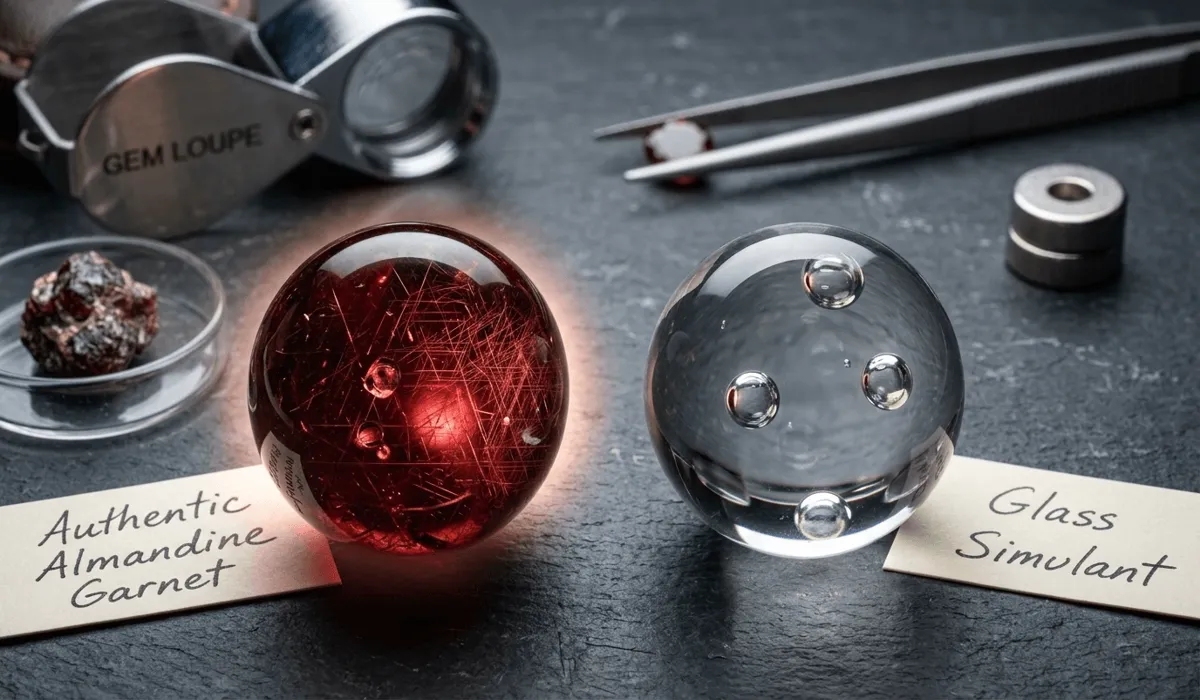
When examining beads or faceted gems under a 10x jeweler loupe, genuine almandine garnets routinely display fibrous rutile needles, microscopic crystal grains, and gentle growth zoning. These internal marks are permanent fingerprints left behind by tectonic heat and pressure over millions of years. For wider context on spotting genuine stones across various mineral families, readers can explore our practical guide to Authentic Mineral Identification.
Glass imitations, on the other hand, almost always contain tiny, trapped gas pockets. If you notice circular air bubbles or swirling flow lines inside a bead, you are looking at artificial glass rather than a natural crystal. In our studio, we also inspect drilled bead holes, because natural stones display subtle, organic chipping around drill sites, whereas molded glass often displays uniform, sharp edges or faint mold seam lines.
Video source: YouTube
Author: Stone & String Studio
Original video link: https://www.youtube.com/watch?v=L-ypq4-F_uA
Physical and Non-Destructive Gemstone Testing
You can perform several reliable, non-destructive checks right at your desk without damaging your jewelry piece. Below is a helpful checklist of non-invasive physical tests to run on suspect red stones:
- 💎 The Focused Flashlight Check: Shine a concentrated white LED beam straight through the stone to verify single refraction with warm amber or orange undertones rather than artificial rainbow light.
- 💎 The Neodymium Magnet Test: Take advantage of the stone natural iron content by observing if a lightweight bead suspended on a string or floating foam disc is gently attracted to an N52 magnet.
- 💎 Thermal Conductivity Touch: Rest the stone against your cheek or inner wrist to note how long it stays cool; real crystal draws heat away slowly, while glass warms up in seconds.
- 💎 Specific Gravity and Heft: Gauge the weight in your hand, as authentic red garnet has a specific gravity between 3.6 and 4.3, making it feel noticeably heavier than glass (2.4 to 2.8).
- 💎 Scratch Resistance: Benefit from the stone natural Mohs hardness of 6.5 to 7.5, which easily resists surface scratching from standard steel needles or window glass edges.
These straightforward physical differences make identifying glass imitations practical for everyday jewelry lovers. For advanced gem testing protocols and professional mineral standards, gemologists frequently consult educational publications from Gemmological Association Guidelines.
Spiritual Meaning & Symbolism
Beyond its gemological significance, red garnet carries centuries of cultural veneration across diverse ancient societies. When we select raw mineral lots for our meditation pieces, we honor the historical lineages that viewed this crimson mineral as an enduring symbol of spiritual grounding and inner resilience.
Traditional Symbolism
Historically, natural red garnet was treasured as a sacred talisman of steadfast loyalty, emotional security, and unwavering devotion. Ancient wayfarers and desert travelers carried polished crimson stones as protective amulets, believing their radiant inner light would guide them through unfamiliar, darkened terrain. In symbolic mineral traditions, the stone embodies patient determination, helping individuals cultivate steady perseverance during extended periods of hardship.
Chakra Associations
In metaphysical wellness practices, natural garnet connects directly to the Root Chakra, known traditionally as Muladhara. This energetic center governs feelings of survival, physical stability, and foundational safety in the material world. To study how different gemstones interact with traditional subtle energy centers, readers can consult our foundational review of Chakra Energy Traditions.
Garnet also resonates warmly with the Sacral Chakra, offering steady balance between physical discipline and creative passion. When worn during quiet reflection, the dense vibration of natural garnet helps draw restless mental activity downward, creating a peaceful, embodied sense of calm.
Cultural and Historical Context
In classical antiquity, Roman officials carved deep red garnets into personal signet rings to imprint official wax documents with protective authority. During the Victorian era, jewelry artisans popularized faceted garnet clusters known as carbuncles, honoring them as gifts of lifelong friendship and loyal affection. Trade caravans traversing ancient Silk Road routes likewise exchanged genuine garnets as sacred markers of mutual trust and enduring hospitality.
Benefits & Intentions Associated with Real Garnet
Many people introduce natural garnet jewelry into their routines to anchor personal goals and establish conscious daily habits. While crystals do not replace medical care, working with tactile natural minerals can provide a comforting sensory anchor for daily mindfulness.
Commonly Associated Intentions
In our studio, clients frequently set intentions around enduring stamina, emotional boundary setting, and reliable personal discipline. Traditional folklore asserts that garnet helps dissolve mental lethargy, encouraging purposeful, concrete action over passive daydreaming. Wearing a natural stone acts as a quiet tactile reminder to honor your daily commitments and remain grounded in your core values.
Mindfulness & Personal Practices
Natural garnet beads serve as wonderful focal tools during breathwork and seated meditation sessions. Rolling the cool, heavy beads between your fingers provides an immediate grounding anchor when racing thoughts arise. Many practitioners place a polished garnet sphere on their workspace or personal altar to represent unwavering dedication to their ongoing inner growth.
How to Wear Natural Garnet Jewelry
Deciding how to wear your garnet pieces depends largely on your personal lifestyle and energetic intentions. In classical Eastern thought, energy circulation follows distinct pathways that inform which side of the body best suits specific minerals.

Left Hand vs Right Hand (Feng Shui Logic)
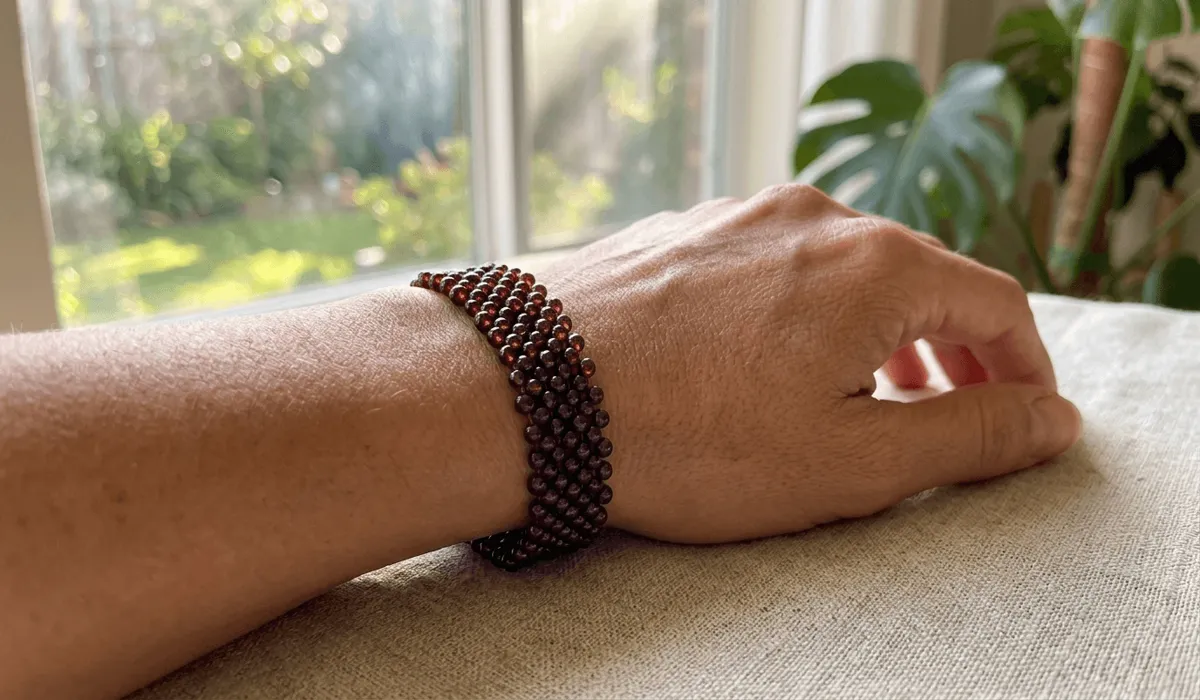
Traditional energy principles associate the left hand with receptive chi (气), making it the ideal wrist for absorbing grounding, restorative energy into your personal reserves. If you feel emotionally drained, scattered, or stressed, wearing a garnet bracelet on the left wrist helps welcome steady, stabilizing energy inward. Conversely, the right hand is considered the projective side, dedicated to releasing intention and radiating strength into your environment.
Wearing your garnet on the right wrist supports active motivation, executive leadership, and the outward manifestation of long-term projects. Many people alternate wrists depending on whether their day demands personal replenishment or confident external drive.
When People Choose to Wear It
Natural garnet jewelry is especially favored during major career transitions, demanding study routines, or heavy life phases requiring extended stamina. Many wearers keep garnet close throughout the colder winter months to enjoy its rich, visual warmth. It pairs seamlessly with earthy sandalwood or neutral crystal beads for balanced, elegant everyday adornment.
Intention-Setting Practices
Before putting on a new piece of jewelry, pause for three measured, mindful breaths while holding the cool beads in your palms. Clarify a single, concise focus—such as perseverance, healthy personal boundaries, or calm focus—for your upcoming day. For those seeking verified authentic stones crafted for intentional living, our studio curates an authentic Natural Garnet Jewelry selection designed for daily mindfulness.
Real Garnet vs Similar Stones or Bracelets
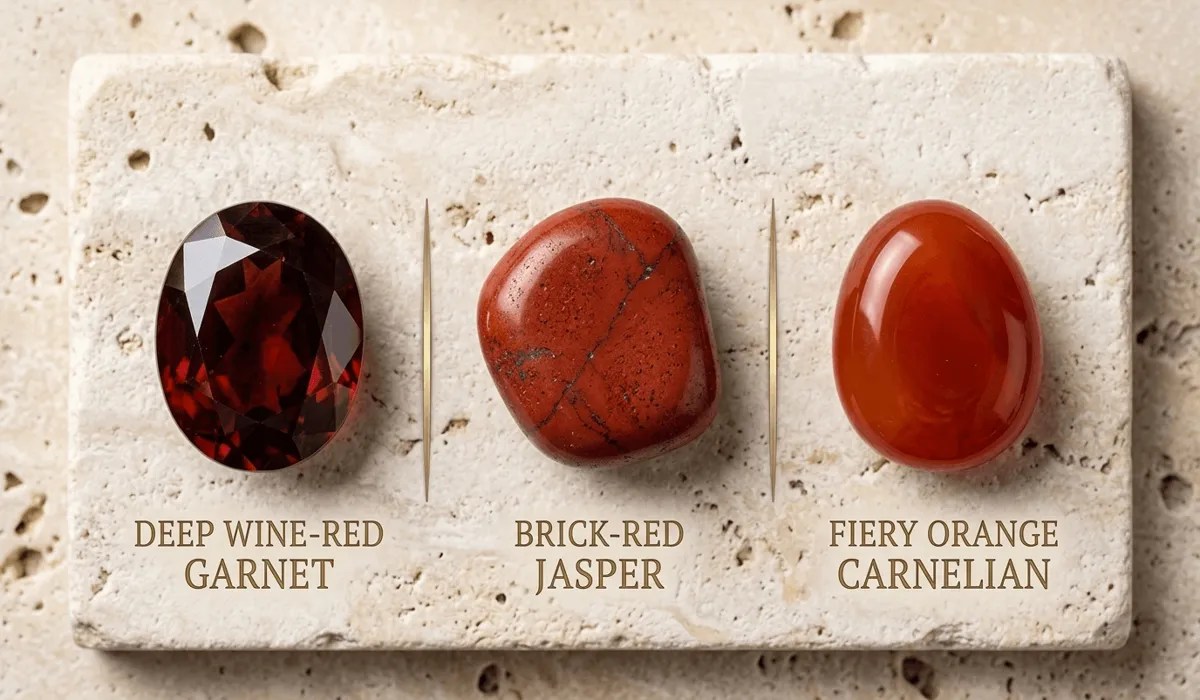
Shoppers often confuse red garnet with other red minerals such as red jasper or carnelian. While these stones share warm palettes, their mineral structures, lusters, and specific gravities differ considerably upon closer inspection.
Natural Garnet vs Red Jasper
Natural red garnet displays a glossy, vitreous luster with deep translucent wine-red tones when held against bright light. Red Jasper, by contrast, is completely opaque with a matte, microcrystalline surface that blocks all light transmission. Furthermore, garnet is noticeably denser and harder on the Mohs scale, making a garnet bead feel significantly heavier than an identical jasper sphere.
Natural Garnet vs Carnelian
Carnelian is a translucent variety of chalcedony quartz that exhibits warm orange to fiery reddish-brown shades, rarely matching the dark burgundy depths of almandine garnet. Chemically, carnelian contains significantly less iron than almandine, so it will not demonstrate any noticeable attraction to a rare-earth magnet. To better appreciate these structural contrasts, gem collectors often consult professional stone profiles provided by the Gemological Research Institute.
The table below summarizes the key geological and practical differences between these popular red minerals:
| Gemstone Name | Mohs Hardness | Specific Gravity | Optical Transparency | Magnetic Reaction |
|---|---|---|---|---|
| Natural Red Garnet | 6.5 – 7.5 | 3.6 – 4.3 g/cm³ | Translucent to Transparent | Weak to Moderate |
| Red Jasper | 6.5 – 7.0 | 2.5 – 2.9 g/cm³ | Completely Opaque | None to Very Weak |
| Carnelian | 6.5 – 7.0 | 2.6 – 2.7 g/cm³ | Translucent | None |
| Colored Glass Simulant | 5.0 – 5.5 | 2.4 – 2.8 g/cm³ | Transparent to Translucent | None |
Who Is Natural Garnet Suitable For?
Natural garnet is an adaptable stone, but its dense, grounded presence appeals particularly to those needing physical anchoring and steady endurance in their everyday routines. Understanding your personal constitution helps ensure harmonious resonance with this ancient mineral.
Chakra and Energy Alignment
Garnet is ideal for people who feel mentally exhausted, spacey, or ungrounded after long hours behind computer screens. Practitioners working to reinforce their Root Chakra find the tangible heft of genuine garnet comforting during mindfulness routines. It gently shifts scattered mental chatter back down into embodied physical presence.
Zodiac and Astrological Associations
Traditionally cherished as the primary birthstone for January, garnet represents renewal, steadfast fortitude, and quiet perseverance through midwinter. It aligns naturally with Capricorn disciplined, practical drive toward meaningful long-term achievements. Astrological traditions also associate garnet with Aries and Scorpio, providing steady emotional grounding to balance impulsive passions.
Lifestyle and Personal Intentions
This mineral is particularly suitable for healthcare workers, educators, students, and busy professionals who must sustain reliable focus throughout long work shifts. Somatic yoga practitioners also cherish garnet for its stabilizing energy during physical postures. Anyone who values authentic craftsmanship and natural geology will find lasting appreciation in a genuine garnet piece.

Garnet & Cinnabar Flower Fu Charm Bracelet – Lucky Red Gemstone Jewelry
📿 Product Details
- Materials: Garnet and cinnabar
- Garnet Bead Diameter: Approximately 4mm
- Centerpiece: Carved red cinnabar flower
- Charm: Gold-tone Fu character medallion
- Accents: Small gold-tone spacer beads
- Colors: Wine red, vivid red and gold tone
- Style: Delicate symbolic gemstone bracelet
How to Cleanse, Charge, and Care for Natural Garnet
Maintaining the structural beauty and energetic clarity of your natural garnet jewelry requires simple, respectful care practices. Because natural gemstones react to physical stress, following gentle cleaning protocols keeps your pieces pristine over years of daily wear.
Gentle care preserves the enduring luster of earth-mined gemstones, honoring both their ancient geological formation and your mindful intentions.
Cleansing Methods
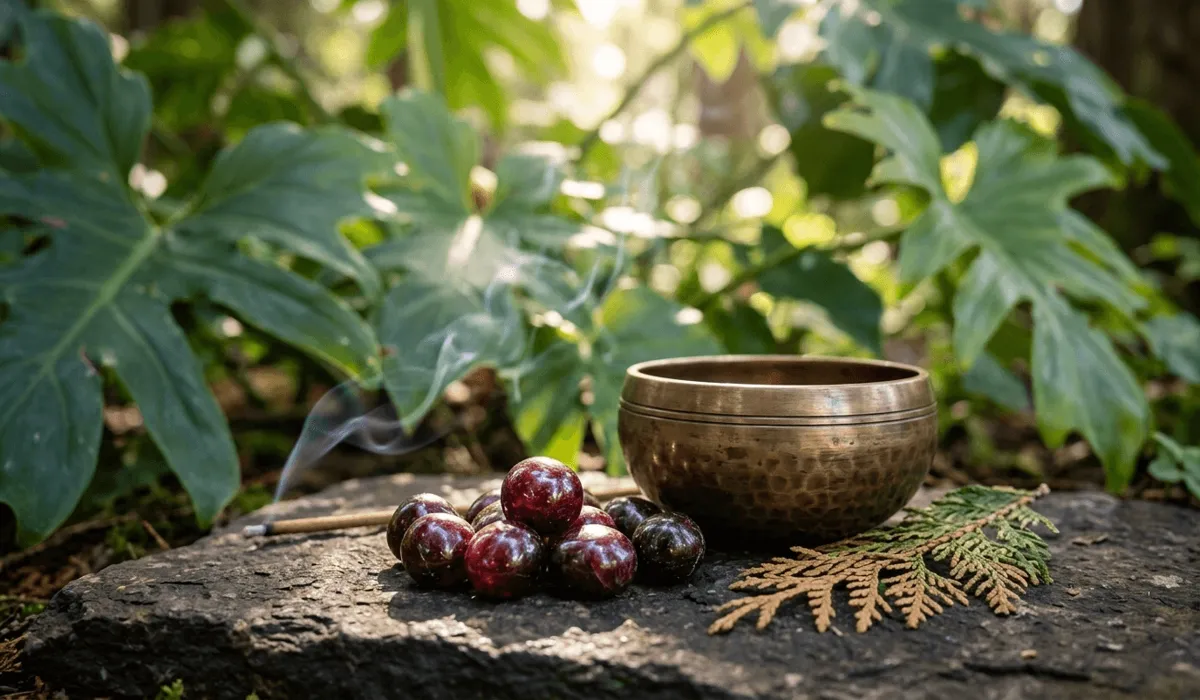
To refresh your garnet jewelry, rinse it briefly under lukewarm tap water and pat dry immediately with a soft cloth. Avoid hot water or sudden thermal changes, as rapid temperature shifts can stress natural internal crystal fractures. You can also cleanse your piece using natural cedar smoke, aromatic sandalwood, or the resonant acoustic sound of a brass singing bowl.
Charging Practices
Recharge your garnet by placing it in soft morning sunlight for fifteen to twenty minutes to enjoy its warm ruby glow. You can also rest your bracelet overnight on a raw clear quartz cluster or a dry selenite charging tray. Another grounding method involves placing the wrapped piece near the soil of a healthy indoor houseplant overnight to reconnect with terrestrial earth energy.
Daily Care & Storage
Store your garnet jewelry separately in a fabric-lined pouch so harder gems like diamonds or sapphires do not scratch the polished surfaces. Always take off your rings and bracelets before vigorous house cleaning, swimming, or handling household detergents. Wiping the beads with a damp microfiber cloth after wearing removes skin oils and preserves their natural glassy shine.
Frequently Asked Questions
Q: How to tell if a garnet is real with a flashlight?
A: Direct a bright white LED flashlight beam through the stone against a white sheet of paper. Real red garnet shows deep wine, burgundy, or warm amber undertones with natural crystal inclusions, whereas fake glass reveals circular gas bubbles and completely flat transparency.
Q: Does natural garnet stick to a magnet?
A: Yes, natural red almandine and pyrope garnets contain substantial amounts of iron and manganese in their crystal matrix, making them weakly to moderately magnetic. When placed on a floating disc or smooth surface, an authentic garnet responds to a strong neodymium magnet, while glass shows zero pull.
Q: Which hand to wear natural garnet bracelet?
A: Wear natural garnet on your left hand to receive grounding, calming stability into your inner energy pathways. Wear it on your right hand when you wish to project active determination, personal authority, and confident drive into outer projects.
Q: How to cleanse and charge genuine garnet?
A: Cleanse genuine garnet by rinsing it briefly in lukewarm water, smudging it with aromatic cedar smoke, or using the acoustic vibrations of a singing bowl. Charge the stone by exposing it to soft morning sunlight for twenty minutes or resting it atop a selenite charging plate overnight.
Q: Who should not wear garnet?
A: Individuals who are currently experiencing severe anger, emotional overheating, or extreme restless irritability may find garnet stimulating warmth somewhat intense. Traditional practitioners suggest that people with excess internal heat opt for cooling minerals like amethyst or jade until balance returns.
Conclusion & Gentle Next Step
Distinguishing real garnet from glass simulants comes down to evaluating weight, thermal response, internal structure, and natural magnetic attraction. By taking a few moments to inspect a stone under focused light and feeling its cool, substantial heft, you can confidently steer clear of mass-produced glass fakes. Genuine garnet connects you to millions of years of earth history while offering a grounding anchor for your daily mindfulness practice. When you are ready to welcome this enduring stone into your routine, take time to explore certified natural stones from reputable artisans who honor authentic mineral craft.
Mindful Reflection: Allow the grounding presence of genuine garnet to remind you that true strength develops quietly beneath the surface, sustained by patient perseverance and steady personal roots.
This content is created solely for informational, educational, and cultural appreciation purposes. Gemstone traditions and metaphysical concepts do not constitute medical, legal, psychological, or financial advice. Readers experiencing health concerns should always consult qualified healthcare professionals.

Written by the Buddha Bodhis Team
Since 2020, we have been devoted to exploring traditional year-based wisdom, classical Feng Shui principles, and the rich spiritual symbolism rooted in Eastern cultural heritage. Our work bridges ancient metaphysical systems with modern life, interpreting annual cycles, elemental energies, and symbolic meanings to offer thoughtful insight and practical guidance. Through continuous research and practice, we aim to preserve traditional knowledge while making it accessible, relevant, and meaningful for contemporary seekers of balance, intention, and personal growth.
TikTok | YouTube | Pinterest | X
buddhabodhis@gmail.com